Regal Jumping Spider Care Guide
Everything you need to keep Phidippus regius healthy: housing, temperature, humidity, feeding, molting, and handling.
Enclosure
Vertical, 6x6x10 in minimum, cross-ventilated with cork bark and silk anchor points.
Temperature
72 to 80°F (22 to 27°C). Regius tolerates room temperature well; avoid cold drafts under 65°F.
Humidity
50 to 60%. Mist one wall lightly every 2 to 3 days and let it dry fully between mistings.
Feeding
Adults: 1 to 2 prey items every 3 to 4 days. Slings: flightless fruit flies every other day.
About Phidippus regius
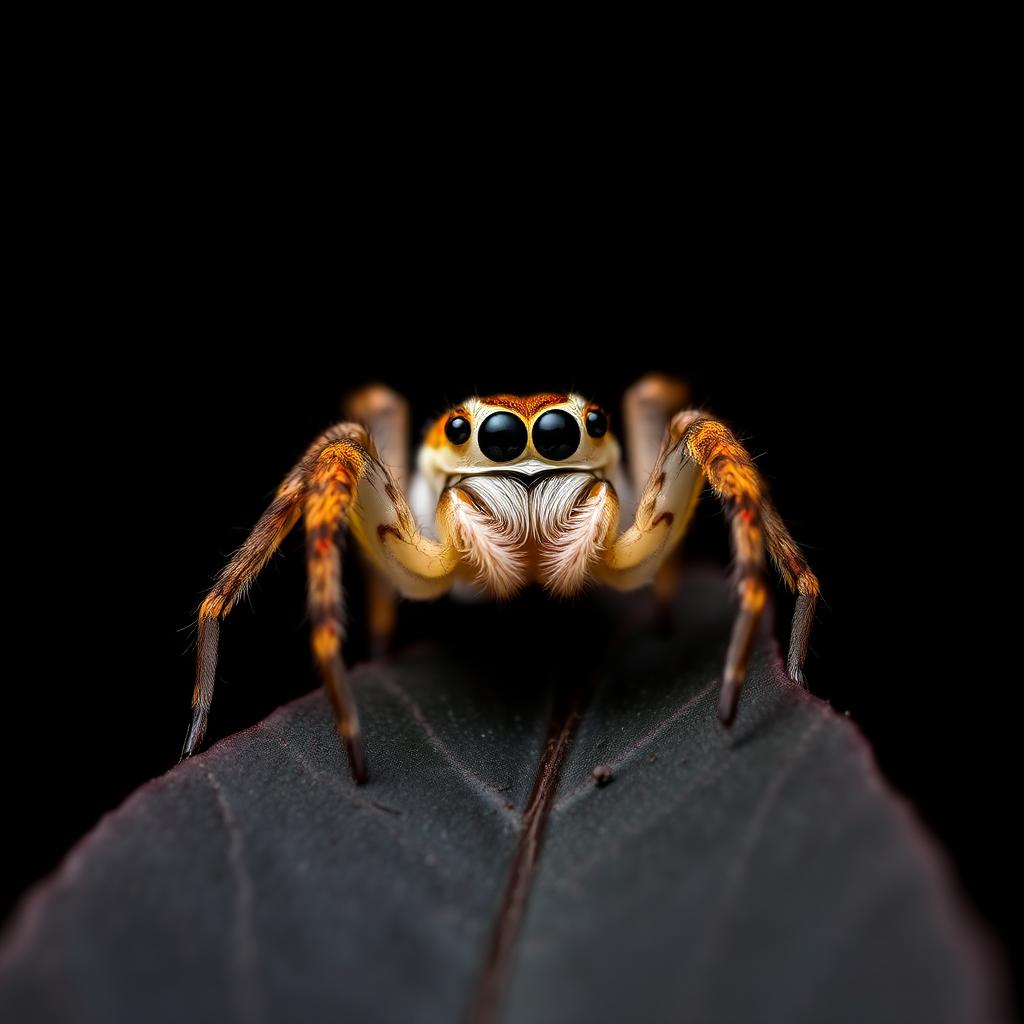
The regal jumping spider is the largest jumping spider in North America and the most popular species in the hobby. Mature females reach 15 to 22 mm and are typically grey to black with a white chevron pattern on the abdomen; males are smaller, jet black, with bold white banding and iridescent teal chelicerae. Their excellent vision and curiosity make them unusually engaging. A regius will turn to watch you across the room.
Setting up the enclosure
Jumpers are arboreal, so vertical space matters more than floor space. A 6x6x10 inch acrylic or glass enclosure with front-opening access works well for adults; slings do better in smaller deli cups until they grow. Add an inch of coco fiber substrate, a piece of cork bark, and a few artificial or live plants so the spider has anchor points for its silk hammock. Cross-ventilation on two sides prevents stagnant, mold-prone air.
Temperature and humidity
Keep ambient temperature between 72 and 80°F. Regal jumpers are hardy at normal household temperatures and do not need a heat mat in most homes. Target 50 to 60% humidity: mist one wall of the enclosure every two to three days, and let the substrate dry out between mistings. Persistent wetness causes far more deaths than dryness. Never place the enclosure in direct sunlight, since glass heats quickly and can cook a spider in minutes.
Feeding schedule
Adults eat one to two appropriately sized prey items every three to four days: flightless fruit flies, small crickets, blue bottle flies, or mealworms no longer than the spider's body. Slings need flightless fruit flies every other day. Remove uneaten prey within 24 hours, since crickets can injure a molting spider. A rounded abdomen means a well-fed spider; a shrunken one means it's time to feed.
Molting and lifespan
Regal jumpers seal themselves in a thick silk molt sac and can stay inside for one to two weeks. Do not disturb, feed, or mist heavily during this time, since a disturbed molt is often fatal. Slings molt every few weeks; adults molt every couple of months until maturity. With good care, females live about 12 to 18 months and males around 8 to 12 months after maturing.
Handling and temperament
Phidippus regius is docile and bites are extremely rare and medically insignificant. Handle low over a soft surface, let the spider walk onto your hand rather than grabbing it, and keep sessions short. Never handle a spider that is in premolt, has just eaten, or is tucked into its hammock.
Looking for a regal jumper of your own?
Our Phidippus regius are $100 each. Join the inquiry list to hear when stock opens.
View spiders for sale